
Posted 8th October 2025
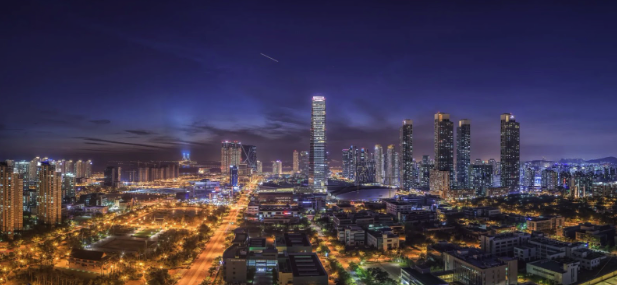
In many of the world’s fastest-growing cities, the backbone of real estate isn’t concrete or steel: it’s smart infrastructure.
This refers to the integration of advanced technologies, such as sensors, data analytics, and AI-driven systems, into essential urban services like transport, utilities, and building management.
In the Asia-Pacific (APAC) region, where rapid urban development and rising populations are transforming cities at an unprecedented pace, smart infrastructure is emerging as a cornerstone of real estate development. Combined with comprehensive infrastructure financing, these projects are enabling faster, more sustainable growth for cities.
From intelligent transport networks that ease congestion to energy-efficient utilities that reduce environmental impact, smart infrastructure lets us reimagine how cities are planned, built, and operated.
For developers and investors, smart infrastructure is more than a public policy priority. It’s a key differentiator that drives property value, attracts capital, and ensures long-term relevance in competitive markets. As APAC’s cities scale up, smart infrastructure will be essential to where people live, work, and invest.
In Bangkok, the ongoing expansion of the BTS Skytrain and MRT networks has become a core element of the city’s urban transformation. These mass-transit corridors are not only easing congestion and improving connectivity in one of the world’s busiest capitals but also unlocking real estate potential in formerly peripheral districts.
With growing accessibility between the central business district and residential areas, condominium and mixed-use projects are growing to meet rising demand from commuters seeking well-connected housing.
Beyond the capital, Thailand is advancing ambitious smart city pilots in provincial hubs like Phuket and Chiang Mai. These projects integrate digital governance platforms, smart transport systems, renewable energy, and sustainability metrics to improve efficiency and livability.
For real estate investors, these initiatives signal new markets outside Bangkok, supported by government incentives and private-sector participation. The combination of transit-led growth and digitally enabled urban management is positioning Thailand as a leading example of how smart infrastructure can redefine urban development at both the national and city levels.
One of the most significant projects in the Philippines is the New Manila International Airport in Bulacan, a massive gateway designed to ease congestion at Metro Manila’s existing airport and serve as a catalyst for regional growth.
In addition to new highways and MRT line extensions, the surrounding area is poised to grow as a cutting-edge airport city with dedicated spaces for businesses, residential communities, and industrial facilities.
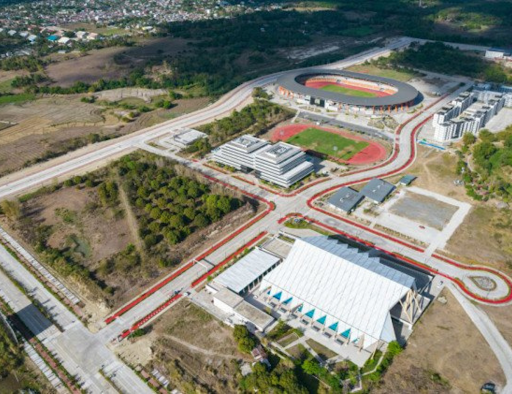
Further north, the government is advancing New Clark City, envisioned as a disaster-resilient, green smart city built on sustainable principles. Backed by solid infrastructure financing, this masterplanned community is attracting support from a mix of government agencies, private developers, and institutional investors who see its potential as a model for modern urban planning.
With its emphasis on renewable energy, integrated transport, and climate resilience, New Clark City exemplifies how smart infrastructure initiatives in APAC can decentralise growth away from Metro Manila while creating entirely new hubs for commerce, housing, and government functions.
Connect with government agencies, developers, and technology leaders building the next generation of smart cities in the Philippines and beyond at EXPO REAL Asia Pacific 2026.
|
New Clark City: Smart, Sustainable, and Future-Ready
|
|
Vietnam is rapidly leveraging smart infrastructure to reshape its urban landscape.
In Hanoi, the new Metro system has already spurred significant growth in property values near stations, demonstrating the transformative power of transit-oriented development on local real estate markets.
Developments located near metro stations have consistently shown strong value appreciation, with Hanoi’s metro-adjacent projects rising by 19% compared to the market average of 12%.
Ho Chi Minh City, meanwhile, is developing ambitious new districts such as Thu Thiem. This is a masterplanned urban area that combines smart planning principles, mixed-use zoning, and forthcoming metro lines to create a vibrant new city centre.
These initiatives are drawing strong interest from both local and international investors, reflecting Vietnam’s shift toward more connected, sustainable, and investment-friendly cities. By prioritising transit, digital integration, and mixed-use development, Vietnam is positioning itself as one of APAC’s rising stars in smart urban growth.
Singapore consistently ranks as one of Asia’s smartest cities, and its approach to smart infrastructure offers a blueprint for sustainable, high-value urban development in APAC.
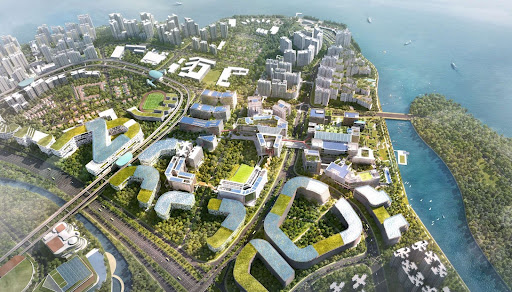
Projects such as the Punggol Digital District and Tengah “Forest Town” exemplify eco-smart living at scale, featuring smart homes equipped with energy-efficient systems and underground waste conveyance networks.
The areas also incorporate car-lite designs that prioritise cycling, walking, and public transport. Such innovations are not only improving the quality of life for residents but also creating new benchmarks for property developers across the region.
The continued expansion of Singapore’s MRT network further illustrates how infrastructure drives real estate transformation. As new lines and stations come online, once-remote neighbourhoods will see increases in housing demand and rising property values.
For investors and developers, Singapore’s experience underscores how smart infrastructure can directly translate into long-term growth, higher asset values, and enhanced urban resilience.
Join decision-makers, innovators, and investors at EXPO REAL Asia Pacific 2026 to explore more transformative urban development solutions like this.
|
Smart Infrastructure at Work: Punggol Digital District
|
|
Under its Society 5.0 vision, Japan is integrating AI, robotics, and IoT technology into its infrastructure and city management to create more efficient, livable, and future-ready communities.
In Tokyo, AI-driven traffic management systems are reducing congestion, preventing accidents, and improving air quality by reducing the emissions generated from idling vehicles in traffic jams. These are factors that enhance the attractiveness and long-term value of surrounding neighbourhoods.
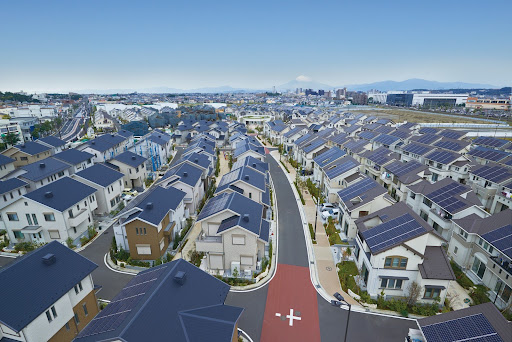
Additionally, initiatives like the Fujisawa Sustainable Smart Town are demonstrating how solar power, EV charging infrastructure, and IoT-enabled housing can create tech-powered communities that command premium property values.
These examples show how Japan is setting the standard for smart infrastructure in Asia, where advanced systems, public policy, and private investment converge to shape real estate markets.
|
Fujisawa Sustainable Smart Town: 10+ Years of Impact
|
|
South Korea has long been a proponent of smart cities in Asia, with some of its first initiatives dating back to the early 2000s. Local conglomerates like LG and SK Telekom have built collaborative relationships with international investors such as Siemens, working together to develop and deploy various smart city technologies for urban development.
The Songdo International Business District stands out as one of the world’s most advanced examples, featuring green-certified buildings, pneumatic waste disposal systems, and an integrated digital governance platform that streamlines everything from energy use to traffic management.
More established cities like Busan have embedded smart infrastructure technologies into urban management, including smart healthcare and a digital twin pilot programme. On top of this, there are ongoing plans to establish a Busan Digital Innovation Academy to train ICT professionals.
Supporting these initiatives is South Korea’s nationwide 5G rollout, which provides the backbone for autonomous transport, smart parking systems, and citywide IoT applications. This high-speed connectivity enhances property markets by improving urban efficiency, safety, and convenience, which are factors increasingly prioritised by both residents and investors.
By combining cutting-edge digital infrastructure with sustainability-focused planning, South Korea offers a clear model of how smart infrastructure in Asia can drive premium real estate values and long-term competitiveness.
Discover how cutting-edge AI and IoT tools are reshaping APAC’s real estate landscape at EXPO REAL Asia Pacific 2026.
Across the APAC region, smart infrastructure is doing far more than just improving city efficiency. It’s reshaping how real estate value is created and where development takes place. The synergy of advanced technology, innovative infrastructure financing, and sustainable urban planning is transforming entire neighbourhoods, decentralising growth, and creating new hubs of opportunity.
For developers, investors, and solution providers, this shift represents a valuable opportunity to get ahead of the curve.
EXPO REAL Asia Pacific 2026 offers unparalleled access to decision-makers across real estate, infrastructure, and investment sectors.
Don’t miss your chance to be part of APAC’s leading platform for real estate innovation and strategic investment dialogue:
Urban development, powered by smart infrastructure, is one of the most powerful forces shaping APAC’s real estate landscape, driving demand for smarter cities, sustainable design, and innovative investment strategies.
Explore the full programme and find your opportunity to participate: